
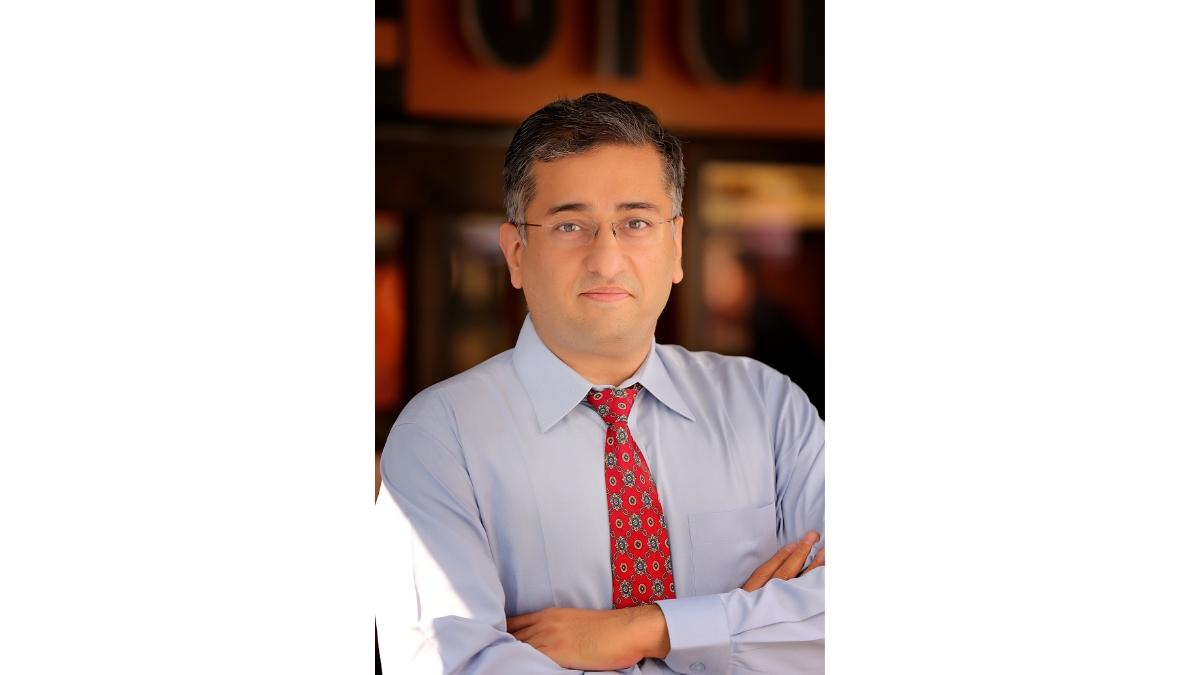
As India expands modern warehousing and digital logistics infrastructure, Strategic Infrastructure & Logistics Leader Hemant Kejriwal believes the bigger opportunity lies in unlocking the true strategic potential of one’s supply chain by making it more connected and flexible.
New Delhi [India], September 8: India’s logistics sector is expanding rapidly, but the next phase of its evolution may be less about adding warehouses and more about how intelligently businesses use the infrastructure being created.
The numbers underline the pace of change. Industrial and warehousing demand across India’s eight major cities touched nearly 22 million sq ft in the first half of 2026, up 12% year-on-year, according to Colliers. Third-party logistics companies accounted for 30% of leasing, while around 25 million sq ft of new Grade A supply was completed during the period.
Behind this expansion, however, lies a less visible challenge: many Indian businesses still treat logistics primarily as an operating expense rather than a source of competitive advantage.
Strategic Infrastructure & Logistics Leader Hemant Kejriwal, who has spent more than 25 years working across supply chains, retail, third-party logistics and international logistics, believes the contrast is particularly evident between consumer-facing and B2B supply chains.
While India’s e-commerce and quick-commerce ecosystems have evolved at remarkable speed, Kejriwal says B2B logistics has been much slower to adapt. “For most businesses, it still remains an unglamorous cost function,” he says, adding that relatively few companies have learnt to leverage supply chains strategically.
That distinction could become increasingly important as India seeks a larger role in global manufacturing and trade.
From more warehouses to more flexible warehouses
One shift may come in the way warehousing itself is consumed.
Businesses today face fluctuating demand, seasonal inventory, uncertain import cycles and rapidly changing distribution requirements. Yet traditional warehousing often requires relatively fixed commitments.
Kejriwal believes the sector could borrow a lesson from flexible offices.
“Just as co-working offices have solved a big problem for commercial real estate, I believe real estate players stepping up and adding a layer of operations to offer flexible warehousing can help unlock significant latent potential for a lot of businesses – big & small,” he says.
The continued dominance of 3PL companies in warehousing absorption suggests businesses are already becoming more comfortable outsourcing infrastructure and logistics operations. The logical next step would be models that allow companies to scale capacity up or down without carrying the full fixed cost of a dedicated facility.
Specialisation may matter too. Kejriwal sees scope for more “category killers” within 3PL operators that build deep expertise in sectors such as pharmaceuticals, fashion or beverages rather than competing across categories largely on price.
As supply chains become more sophisticated, 3PL developing deep expertise in an industry vertical will be able to differentiate themselves better & truly help unlock value for the customer & themselves.
Before AI, logistics has a data problem to solve
Technology is another area where the industry is moving quickly.
At the government level, India’s logistics architecture is becoming considerably more connected. The Unified Logistics Interface Platform, or ULIP, now integrates 46 systems across 12 central ministries and departments through 142 APIs and more than 2,000 data fields. More than 260 applications have already been developed using the platform.
Inside enterprises, however, fragmentation remains a challenge.
Warehouses, transporters, manufacturers and distributors operate across multiple Warehouse Management Systems and Transport Management Systems, often with different data structures and limited interoperability.
For Kejriwal, this makes some of the excitement around artificial intelligence premature.
“Even AI will not be able to help us till we aren’t able to feed data to it,” he says.
AI can improve forecasting, visibility, route planning and decision-making, but its usefulness ultimately depends on the quality and accessibility of the underlying information.
The next digital breakthrough in logistics may therefore come not simply from adopting AI, but from getting different parts of the supply chain to speak the same digital language.
Geopolitics is making flexibility more valuable
Recent disruption to international shipping has added urgency to that conversation.
Tensions across West Asia have pushed up freight costs and complicated shipping routes for Indian businesses. In July 2026, India’s merchandise exports reached a record $44.24 billion, even as exporters faced higher freight charges and logistical delays linked to the conflict.
Such disruptions are turning decisions about where businesses hold inventory, how quickly it can be rerouted and what alternatives exist when a trade corridor is interrupted into strategic questions.
It is in this context that Kejriwal expects infrastructure such as Special Economic Zones and Free Trade Warehousing Zones to become more relevant.
“SEZs and FTWZs, with all the flexibility they enable, remain a massive opportunity that still remains largely untapped,” he says.
The larger argument is about optionality. In a world where geopolitical events can alter trade routes almost overnight, businesses need to build adaptability into the design of their supply chain, rather than merely focusing on operating efficiency under normal conditions.
India has made measurable progress on the broader logistics front. A DPIIT-NCAER assessment places the country’s logistics cost at 7.97% of GDP, replacing the much higher estimates frequently cited in earlier years.
But lower costs and better infrastructure are only part of the equation.
For Kejriwal, the definition of a world-class supply chain is surprisingly straightforward: inventory should be accurate, safe and visible in real time; businesses should be able to move it predictably; and the rules governing its movement should be clear.
That may also describe the next challenge facing Indian logistics.
The physical and digital rails are increasingly being built. The competitive advantage now has to move inside the enterprise, into how companies design, connect and use their supply chains.
If you object to the content of this press release, please notify us at [email protected]. We will respond and rectify the situation within 24 hours.